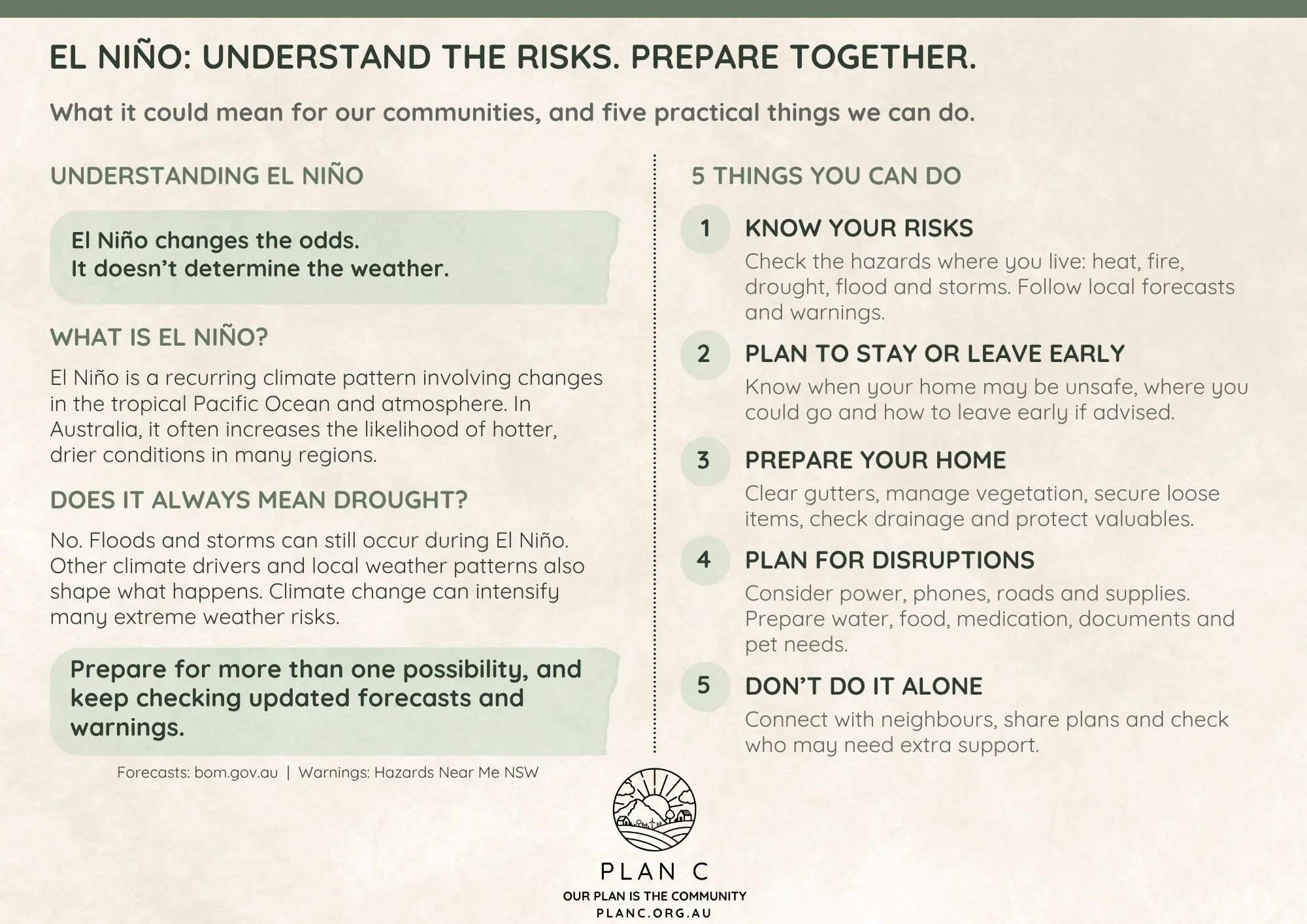
With a strong El Niño underway and summer approaching, many people are understandably wondering what the coming months might bring.
While El Niño often increases the likelihood of hotter, drier conditions in parts of Australia, it doesn't determine our weather. Floods, storms and heavy rainfall can still occur, and other climate influences can change what we experience locally.
The Bureau of Meteorology's latest outlook highlights the possibility of above-average rainfall in parts of eastern Australia, alongside unusually warm temperatures.
The message? Prepare for more than one possibility.
Drawing on Dr Jean Renouf's recent posts, we've put together a simple, one-page resource explaining El Niño and sharing five practical ways to prepare for the months ahead.
And if you're ready to take the next step, Plan C's My Disaster Plan is a practical workbook to help you think through your own preparations, from understanding your local risks and preparing your home to making evacuation plans, organising essential supplies and identifying who you can turn to for support.
Because preparedness isn't just about emergency supplies and plans. It's also about knowing our neighbours, looking out for one another and building the connections that help us navigate difficult times.
📄 [Download our El Niño fact sheet and checklist — LINK TO BE ADDED]
📋 [Download Plan C's My Disaster Plan — LINK TO BE ADDED
🎥 Watch the Bureau of Meteorology explain why rain can still occur during El Niño
For the latest local forecasts and warnings, visit the Bureau of Meteorology and Hazards Near Me NSW.